 Back
Back
Regenerative food systems on St Helena
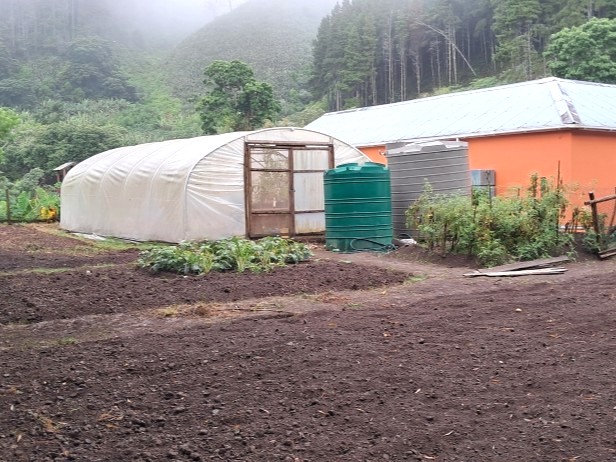
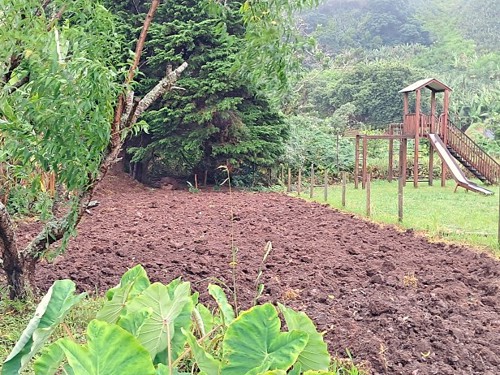
The future fruit and herb garden, newly cleared using our project-funded plough, with the existing polytunnel and piles of sand and dust in the background ready to be used as bases for the water tanks that will collect rainwater. Credit – Gonny Hubbard.
Building climate resilience through regenerative food systems on St Helena
On the remote island of St Helena, home to one third of the endemic biodiversity recorded across mainland UK and its Overseas Territories, climate change poses a growing threat to fragile ecosystems and food security. This project, led by St Helena Active Participation in Enterprise (SHAPE), is working to strengthen both environmental and community resilience by integrating natural capital into local food production.
Our garden sits just 50 m from the boundary of the Peaks National Park cloud forest, which alone supports 17% of the island’s endemic biodiversity. Yet St Helena faces increasing climate pressures, including shifting rainfall patterns, pest and disease outbreaks, and soil degradation. Agriculture remains heavily reliant on imported produce, while local farming often depends on reactive pesticide use and small-scale production systems vulnerable to climate shocks.
From the outset, our project was designed with climate uncertainty in mind. We are developing an organic, regenerative food system that protects biodiversity, improves soil health, and reduces reliance on imported goods. By avoiding synthetic pesticides and herbicides, we safeguard surrounding ecosystems while building healthier soils that retain moisture, store carbon, and enhance resilience to drought and extreme weather.
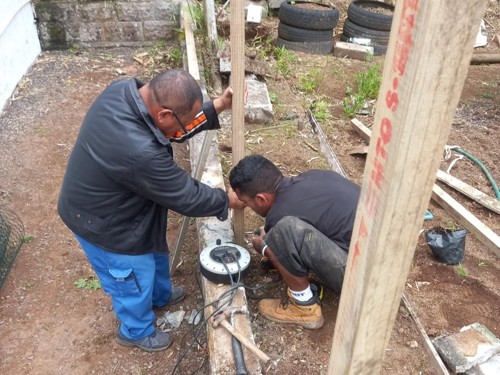
Renewable energy forms another pillar of our climate adaptation strategy. By integrating solar power into our production system, including powering a new walk-in cooler, we aim to reduce fossil fuel dependence, lower carbon emissions, and ensure secure storage of produce, despite supply chain disruptions or extreme weather events.
Progress to date includes a biodiversity survey conducted by St Helena National Trust, site clearance and boundary preparation, groundwork for water storage infrastructure, and preparation for installation of the walk-in cooler and solar system. Organic seeds have now arrived, and propagation is beginning in line with our growing plan.
Beyond infrastructure, this project supports long-term resilience by demonstrating that sustainable farming can enhance biodiversity while improving food security and livelihoods. By matching production more closely to local demand, reducing imports, and promoting preventative, nature-based approaches to pest management, we aim to strengthen both ecosystem health and economic sustainability.
As climate pressures intensify, small islands like St Helena must adapt quickly. Through integrating natural capital into business practices, we are building a model that shows environmental restoration, food production, and climate resilience can go hand in hand.
Written by Gonny Hubbard. For more information on this Darwin Plus Local project DPL00146, led by St Helena Active Participation in Enterprise (SHAPE), please click here.