 Back
Back
Solar-powered coral conservation
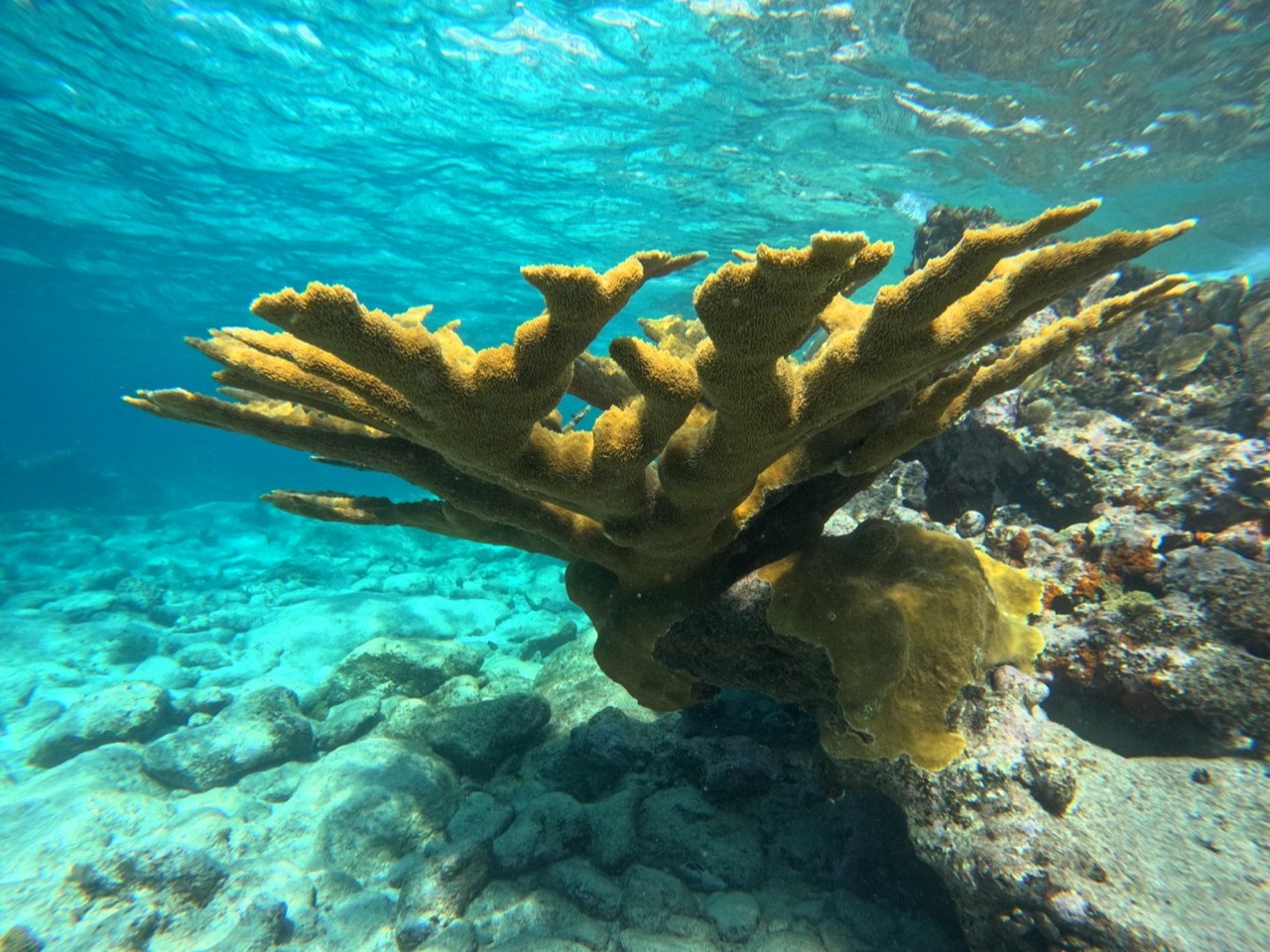
Endangered elkhorn coral, Acropora palmata, is one of the primary reef builders of the Caribbean and a focus of conservation efforts. Credit – John DeBuysser
Fostering coral-human symbiosis: Solar-powered coral conservation in South Caicos
The Caribbean coral population has rapidly declined in the past 50 years. Primary reef-building corals of the region, such as Acropora sp. and Orbicella sp., are critically endangered throughout their range. Tropical coral reefs face the challenge of rising sea temperatures and increasing ocean acidity, driven by the spike in atmospheric carbon dioxide. Today, our atmosphere has reached 430 ppm (parts per million) of carbon dioxide, a concentration the Earth has not seen in over 3 million years. The ocean acts as a climate buffer, absorbing 30% of Earth’s carbon dioxide emissions and 90% of the additional heat from these emissions. As such, marine ecosystems have already experienced vast changes that have yet to be felt to the same degree on land.
The evolutionary history of corals over the past 250 million years has shown their ability to adapt to a wide range of climate conditions, but typically they experience this change over a period of several thousand years, unlike the past 200 years of modern industrialisation. Corals struggle to adapt to these quick changes, leading to slow growth and the stress response commonly known as coral bleaching. Coral bleaching does not involve the chemical cleaner we see on the shelves, but rather it is the temperature-driven breakdown of the relationship between coral and the algae that lives inside it. This leaves the coral stark white, stressed, and starving.
Coral bleaching was once a relatively rare incident, isolated to small areas with random seasonal thermal anomalies. The first global coral bleaching event was observed in 1998; an unprecedented, once-in-a-lifetime event in which coral reefs in all tropical ocean basins (Atlantic, Indian, and Pacific) bleached within one year. However, it happened again in 2010 and impacted an even greater area. The third global bleaching event occurred from 2014 to 2017, affecting 68% of reefs worldwide and leading to substantial coral death. We are currently in the midst of a fourth event, which began in 2023 and has severely affected 84% of reefs worldwide. This is leaving some reef tracts with almost no surviving corals. A new climate precedent is developing and challenging nations that depend on their coral reefs for sustenance, economy, and coastal protection.
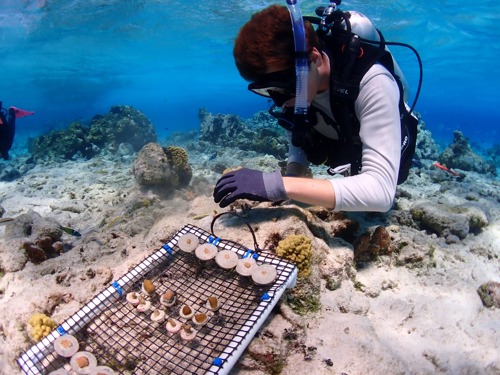
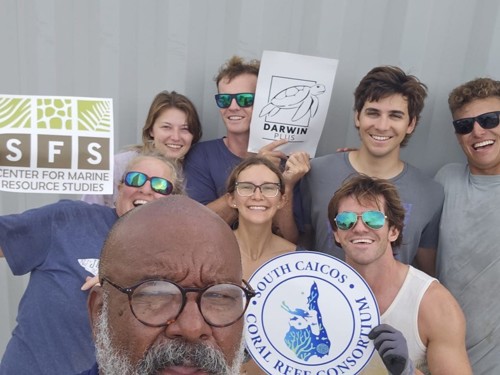
South Caicos is a small island on the southeastern edge of the Turks and Caicos Islands, part of the greater Bahamian archipelago. The island has a small population of 1,000 - 2,000 people and has had modest development. However, its reefs are not immune to global climate change and South Caicos has lost more than half of its coral population. In response, the South Caicos Coral Reef Consortium was founded in 2023 to conserve the remaining resilient colonies and begin to rebuild reef populations.
The Consortium is managed by the School for Field Studies (SFS) and partners with Salterra Resort & Spa, the Turks and Caicos Reef Fund, and the Reef Institute. SFS specialises in facilitating marine research study abroad opportunities for college students and maintains a diverse workforce. This includes a centre director, marine operations manager, diving safety officer, three lecturing faculty, dive instructors, dive masters, and a coral project manager. Staff and students undertake and accomplish field-based ecological research and restoration. Salterra Resort & Spa has been a strong supporter of environmentally-sound development and tourism on South Caicos, and provided funding to support the development of five ocean sites as coral nurseries and a land-based coral lab with a flow-through seawater system. These systems now grow an array of endangered species, facilitating conservation, education, and outreach with the island community.
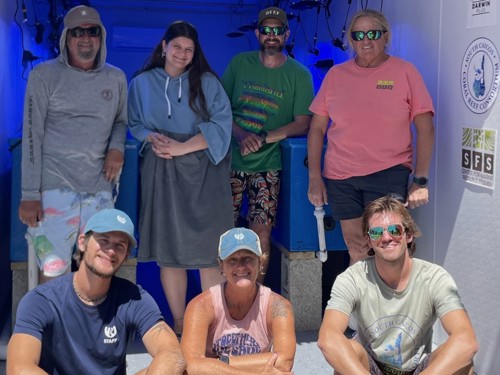
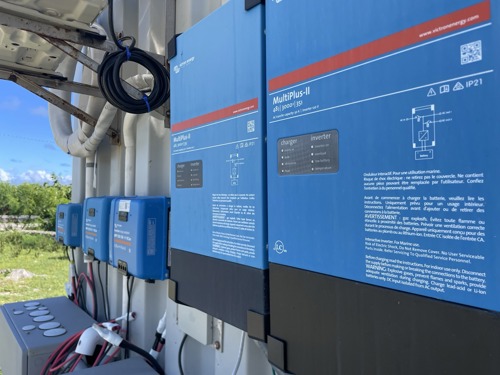
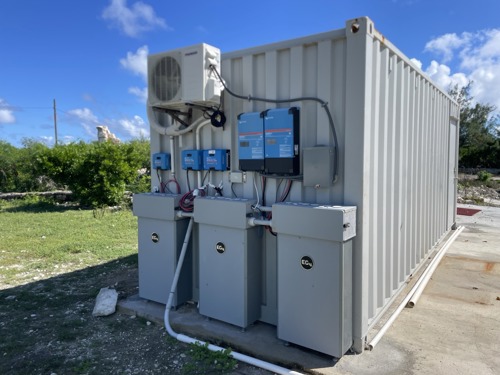
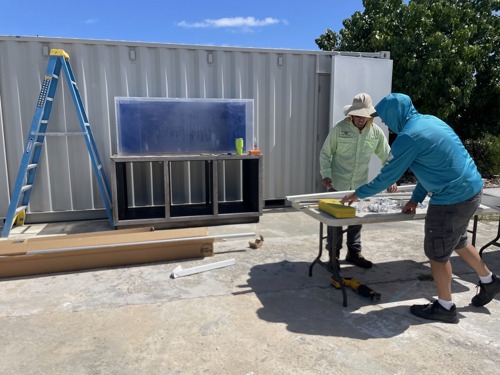
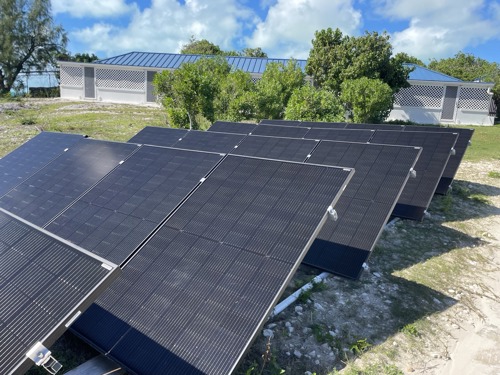
Support from Darwin Plus Local has helped to further conserve endangered coral species on South Caicos with a solar-powered coral biobank and spawning aquarium system, all housed within a 6 m tall metal shipping container. The overall goal of this system is to conserve existing coral populations while working to propagate the next generation of climate-resistant coral larvae for eventual recolonisation of reef habitats. The container houses three, 1.8 m long coral growing aquariums and a filtration sump for a total system capacity of 2,700 L. The container is insulated, air conditioned, and features adjustable LED grow lighting and fully controllable water chemistry and filtration. A series of hurricanes caused a slight delay to some of the containers’ operations, as repairs were made and infrastructure fortified with additional storm-proofing measures.
The options with closed aquarium systems are endless, offering the ability to foster enhanced growth rates, promote temperature stress adaptations, and conduct coral spawning events, all necessities for producing climate-ready corals for future generations.
Written by John DeBuysser and Heidi Hertler. For more information on this Darwin Plus Local project DPL00110, led by the School for Field Studies, please click here.