 Back
Back
Water management in intense weather
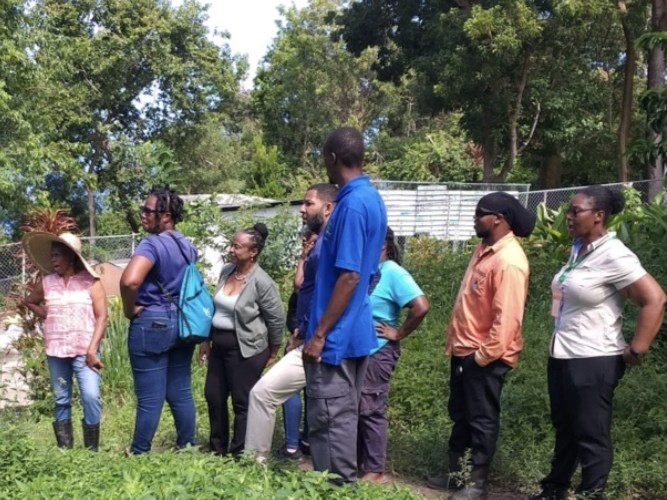
Ministry of Agriculture Officials Climate Adaptation & Biodiversity Field Visit to Duck Pond Farm, March 2026. Credit - Stephen Mendes.
New infrastructure boosts climate resilience and biodiversity
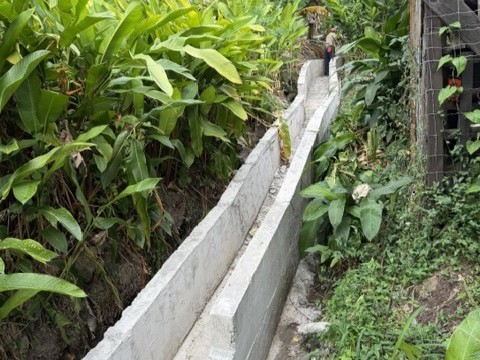
Skerritt’s Duck Pond Farm in Montserrat has long been a cherished community fixture, well known for its dedication to agricultural stewardship. During the first quarter of 2026, with the blessings of the Ministry of Agriculture and supported by Darwin Plus Local, the farm reaffirmed its commitment to a sustainable future with the construction of critical infrastructure: a 61 m (200 ft) by 0.61 m (2 ft) concrete drain which will serve the dual purpose of protecting the farm’s biodiversity and contributing to climate change adaptation.
Fortification against climate variability
The concrete drain is specifically engineered to address the unpredictable and intense weather patterns brought about by climate change, in particular the effects this has on water management. This efficient system already channels excessive stormwater runoff away from vulnerable areas above its location as well as from the farm. Furthermore, it will prevent waterlogging and reduce the farm's overall vulnerability, thus boosting its climate resilience.
A concrete solution for conservation
Equally important, is the drain’s role in protecting the farm’s biodiversity. When heavy rain falls on the farm, the resulting uncontrolled runoff carries away not only soil, but also agricultural nutrients, like compost. This nutrient-rich runoff flows into nearby sensitive ecosystems, such as the vetiver plant stools and among the fruit trees, causing nutrient deficiency resulting in significant disruption to their natural balance.
By capturing and channelling this runoff through the concrete drain, the Duck Pond Farm now gains a crucial point of control. Consideration will be given to integrating filtering systems, so that some of this water can be redirected for farm use. This controlled management prevents excessive nutrient loading in surrounding ecosystems, safeguarding fauna, insects, and native plants that thrive on the farm and in its vicinity.
Community in action: Interactive field days
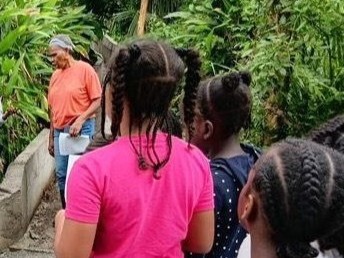
This initiative is deeply rooted in community engagement. Skerritt’s Duck Pond Farm is well known for its dedication to education and sharing knowledge about sustainable practices. Since the drain’s construction and establishment of the vetiver plant stools, we have hosted numerous interactive field days, drawing diverse and enthusiastic land stewards. Visitors have ranged from curious nine-year-old pupils, college enthusiasts considering career options, farmers, nature lovers, as well as Ministry of Agriculture officials.
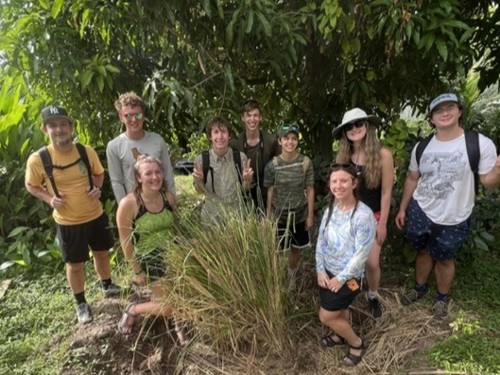
Credit - Claudia W Charles-Skerritt.
All have actively participated in hands-on learning opportunities, sharing their practical experiences, and students have promised to keep nature wild and wonderful. Field day activities have included guided biodiversity walks, talks on soil and plant health, interactive discussions about water management, and making the farm a living classroom adventure to raise ecological awareness across generations.
The installation of this concrete drain, the establishment of the vetiver plant stools along the fence line, and the creation of the miniature bird sanctuary on Duck Pond Farm stand as powerful examples of proactive climate action and biodiversity enhancement that can be achieved when environmentalists and funding partners collaborate. It demonstrates how thoughtful, effective engineered solutions can be integrated into agricultural landscapes to build resilience against climate variability while simultaneously fulfilling a deep commitment to environmental conservation and community education.
Written by Claudia W. Charles-Skerritt. For more information on this Darwin Plus Local project DPL00140, please click here.