 Back
Back
Growing coral in a changing climate
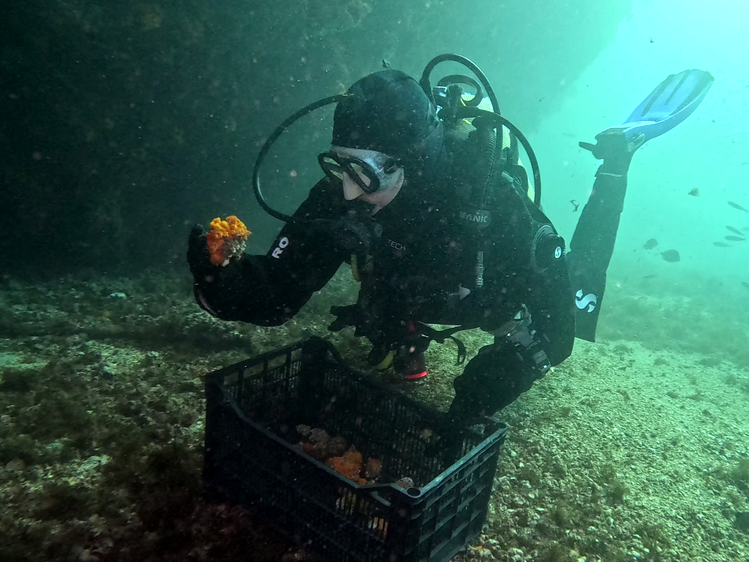
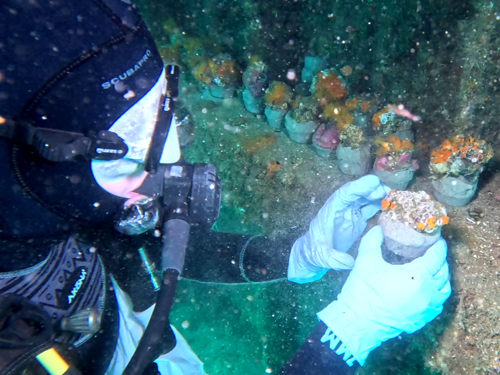
Collection of detached Corals of Opportunity from the sand. Credit – Alice Scomparin.
Scalable, adaptive restoration strategies in Gibraltar
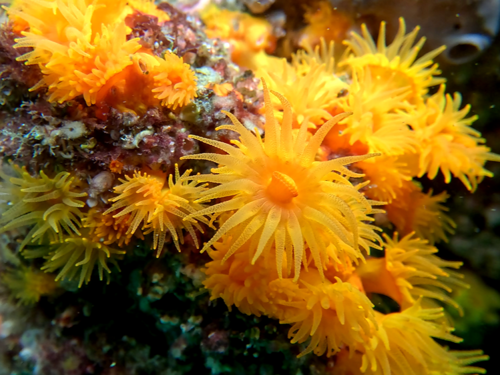
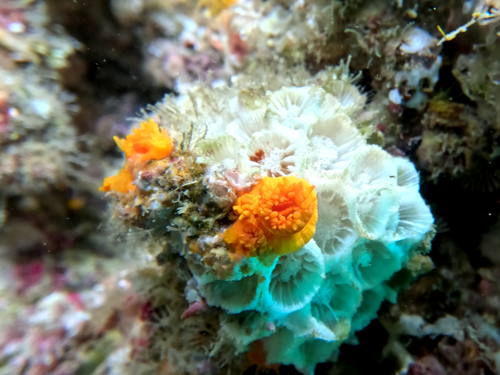
Project CORA - Coral Outplanting and Restoration for Astroides calycularis - restores Gibraltar's vulnerable orange cup coral, an endemic Mediterranean species increasingly threatened by climate change and local stressors. Astroides calycularis is a habitat-forming species that creates complex microhabitats across Mediterranean rocky reefs. Its bright orange colonies provide shelter and structural refuge for invertebrates, small fish, and associated macrofauna, underpinning local marine biodiversity. Yet ocean warming, invasive species, habitat degradation, and intensified storm events are contributing to population declines across its range.
Climate risk considerations are embedded at the core of our approach: we collect and rescue naturally detached ‘Corals of Opportunity’ (CoPs). These are coral colonies that are dislodged from reef walls through waves, storms, or other mechanical damage, that would otherwise become buried in sediment and die. Rather than removing healthy colonies, this method ensures zero additional reef damage.
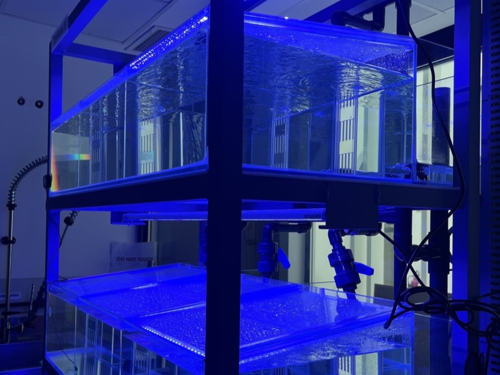
Recovered corals are stabilised by securing them to elevated cement blocks with custom underwater cement adhesive, structures known as ‘Coral Cupcakes’. This method achieves over 80% attachment success and substantially reduces the risk of sand smothering of the coral. Once stabilised, corals are propagated in dual nursery systems: in-situ PVC nursery trees in the ocean, which protect colonies from sediment and algae overgrowth, and ex-situ tank systems on land, where controlled environmental gradients (including temperature) allow us to simulate and test future ocean conditions. The time in the nursery prepares colonies for eventual transplantation onto artificial reef structures, supporting overall A. calycularis population recovery while enhancing broader ecosystem resilience.
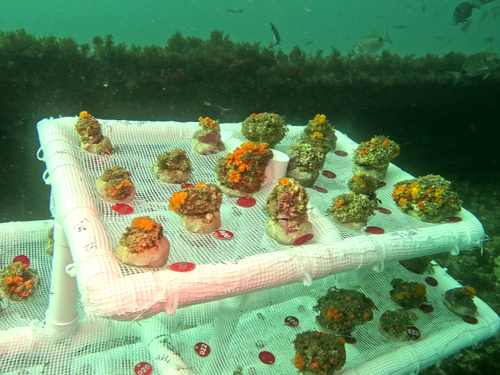
During the nursery phase CORA conducts non-destructive monitoring, including standardised videography and marine imaging, to analyse and quantify coral surface area and health metrics. These regular assessments allow us to track and interpret coral recovery and growth over time. This methodology offers a scalable approach for restoration practitioners worldwide: it is cost-effective, reproducible, and minimally invasive.
However, restoration in a dynamic environment comes with real-world challenges.
Storm challenges: Delays and project adaptability
Gibraltar's recent winter brought unprecedented storms - fierce winds, torrential rain, powerful currents, and massive waves that halted all underwater fieldwork for weeks. No diving was possible, and our coral nursery tree was dislodged, scattering the Coral Cupcakes back to the seafloor and erasing monitoring progress. Planned transplantation remains pending due to ongoing unsafe sea conditions. These events perfectly mirror the very threats facing A. calycularis in a changing climate: rising storm intensity and frequency increase physical dislodgement and sand-smothering risk, while rising sea temperatures weaken overall coral health and resilience.
During this exceptional period, CORA demonstrated project adaptability. With marine work paused, we refocused on land-based priorities - expediting ex-situ tank optimisation, methodological training, and community outreach - shifting timelines and rebalancing activities to maintain project momentum despite environmental setbacks. Critically, we gained valuable resilience insights: recovered Coral Cupcakes showed survival post-dislodgement, proving A. calycularis’ toughness and tolerance against physical disturbance.
Building community capacity
Beyond ecological restoration, CORA strengthens local capacity by equipping scientists and divers with the tools to replicate and scale restoration efforts. We conducted photoQuad workshops educating early-career researchers in standardised marine imaging for coral analysis. This technique is transferable, globally relevant, and empowers capacity-building. Local divers received practical training in underwater imaging and coral transplantation preparation, positioning them as future ‘Cupcake Keepers’.
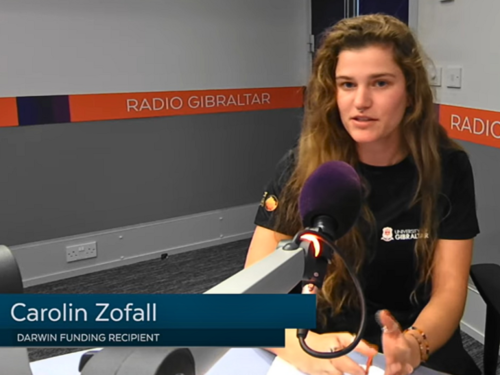
Local radio contributions and social media outreach further amplified impact. Instagram reels highlighting coral threats or restoration concepts reached over 7,000 views within and beyond the Gibraltar community, increasing awareness of Mediterranean coral conservation.
Future impacts: Resilience testing and mitigation
Climate change, more frequent storms, and intensified ocean warming pose ongoing risks to Astroides calycularis and the Mediterranean, increasing the need for scalable, adaptive restoration strategies. CORA’s ex-situ laboratory systems are now testing heat sensitivity thresholds, generating insights into A. calycularis thermal tolerance under forecasted warming scenarios. This research informs targeted support for vulnerable species and evidence-based restoration protocols. By restoring Astroides calycularis, CORA is not only rebuilding coral populations but strengthening the ecological foundations of Gibraltar’s rocky reefs in an era of climate uncertainty.
Written by Carolin Zofall and Awantha Dissanayake. For more information on this Darwin Plus Local project DPL00136, led by University of Gibraltar, please click here.