 Back
Back
A future for Gibraltar’s oysters
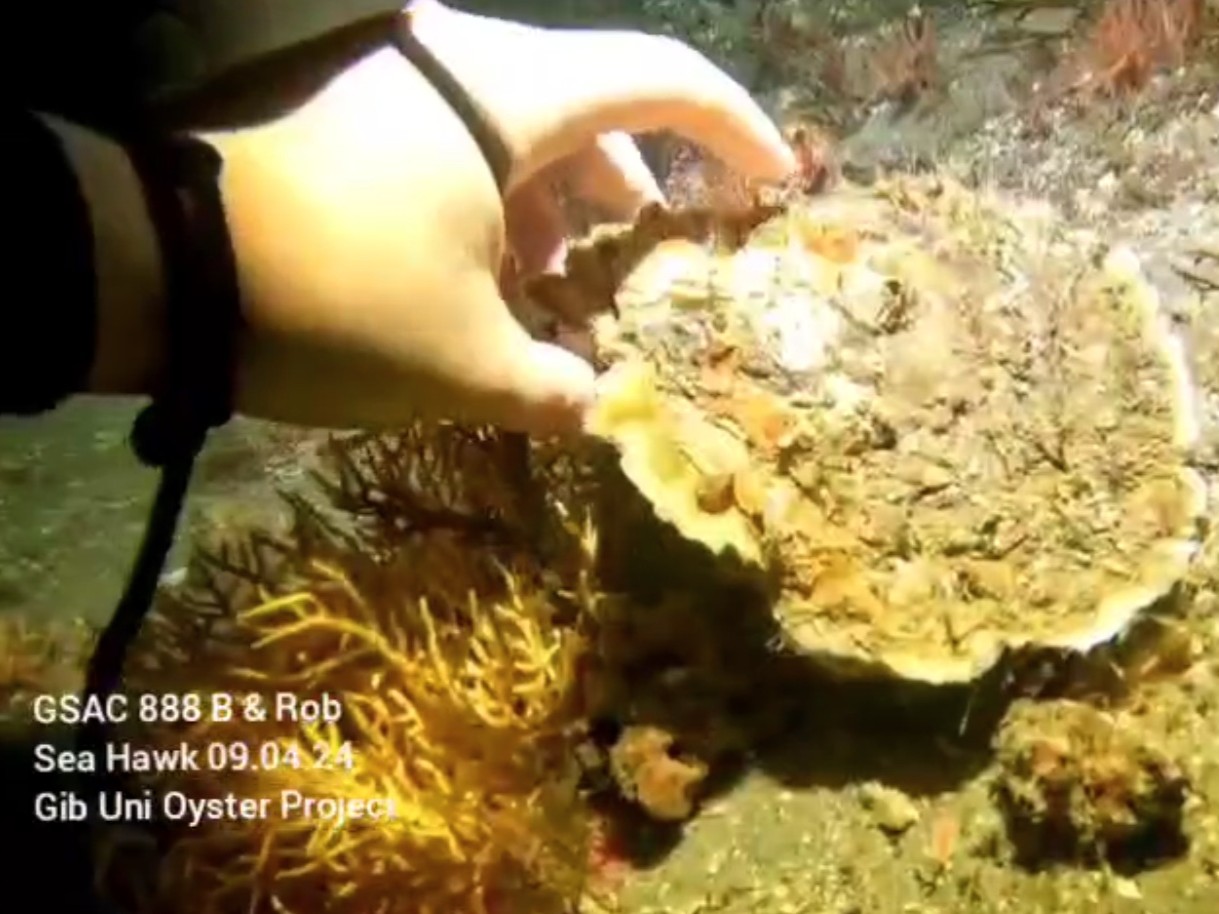
Citizen Science oyster sighting in British Gibraltar Territorial Waters (BGTW). Credit – Bianca Daniell.
Locating suitable sites for oysters in Gibraltar
European oyster (Ostrea edulis) populations in British Gibraltar Territorial Waters (BGTW) have declined dramatically since the 19th century from overfishing and other environmental stresses. This project aimed to support oyster restoration efforts, in particular through surveying habitats and identifying suitable locations for establishing reintroduction programmes.
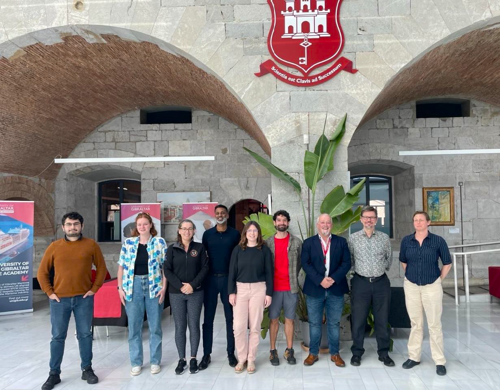
Led by Darren Fa, the project established a citizen science network with local divers creating a database of oyster sightings. HM Government of Gibraltar’s Department of the Environment, Sustainability, Climate Change and Heritage (DESCCH) provided data on abiotic factors (the non-living, physical, and chemical components of the environment) from previous surveys as well as logistical support, such as boats for site assessments. Internationally, the project engaged with the Native Oyster Restoration Alliance (NORA) and oyster specialists from the University of Edinburgh and Heriot Watt University in the UK, and the Spanish National Research Council (CSIC). These experts provided insights into oyster ecology, restoration techniques, and site suitability assessment.
A survey considering parameters such as water depth, temperature, salinity, and water clarity pinpointed the area off Rosia Bay, on the western side of the territory as the most suitable site for oyster restoration. Surveys also discovered small numbers of oysters still present at the site of an earlier restoration pilot project. These samples tested free of the Bonamia ostreae parasite (a parasite that can cause a lethal disease in European oysters), validating the suitability of the site for a more comprehensive, and better-managed, restoration initiative in the future. DESCCH has confirmed support for this initiative, and will actively seek to incorporate protection for any future restoration efforts via the enforcement of regulations and implementation of no-take zones.
Written by Darren Fa. For more information on this Darwin Plus Local project DPL00057, led by University of Gibraltar, please click here.