 Back
Back
Decoding insect DNA in Cyprus
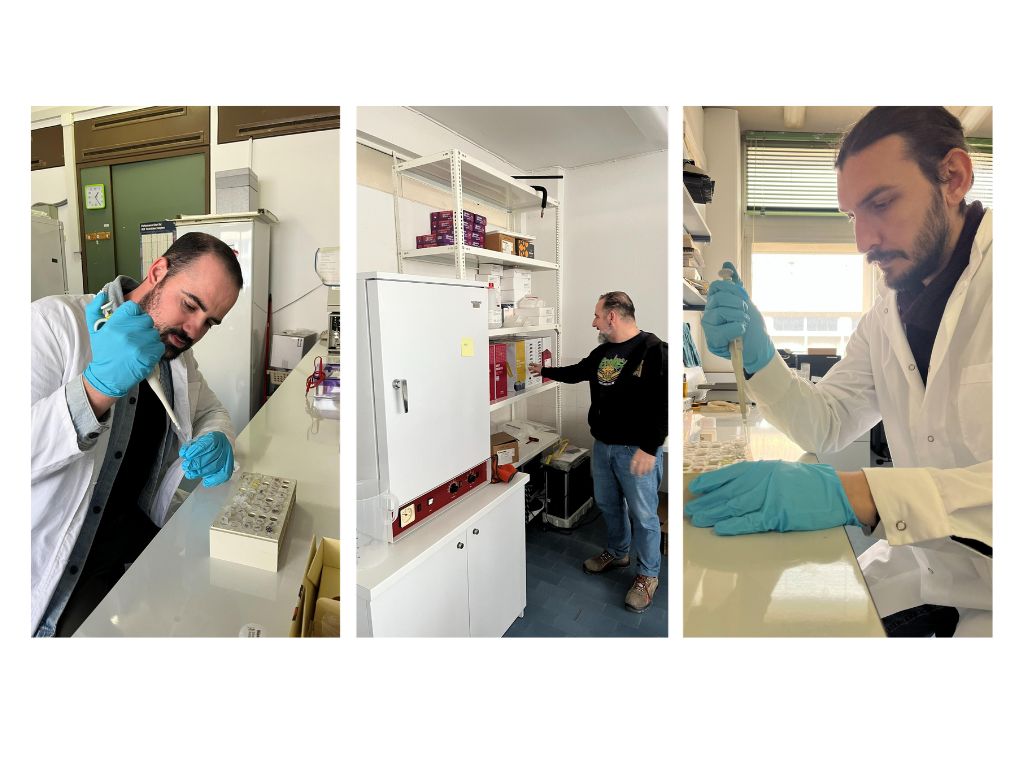
Evangelos Koutsoukos, Dr Dimitrios Avtzis, and Mr Jakovos Demetriou (from left to right) during DNA barcoding training at the Forest Research Institute - Hellenic Agriculture Organization Demeter. Credit – Evangelos Koutsoukos and Jakovos Demetriou.
Detecting, identifying, and barcoding non-native insects
The island of Cyprus lies at the crossroads of three continents (Europe, Africa, and Asia), and the constant transport of people and goods has shaped its biodiversity throughout the millennia. Globalisation and the ever-growing increase in trade has resulted in more than 1,000 non-native species being transported to the island, amongst them over 350 species of non-native insects. The high biodiversity of these non-native insects combined with a lack of taxonomic experts hampers swift identification, while their impacts on the UK Sovereign Base Areas, as well as Cyprus as a whole, are mostly unknown. This two-year project ‘DNA barcoding and impact assessment of non-native insects on Cyprus’ aims to construct a DNA barcoding library of the non-native insects of Cyprus and assess their impacts on native biodiversity, human-health, and socio-economic parameters, assisting rapid identification, monitoring efforts, and informing national policies.
In 2025, we undertook numerous material surveys on the Akrotiri UK Sovereign Base Area, as well as the island of Cyprus as a whole, detecting and identifying specimens of non-native insects. Up until late January 2026, we managed to collect approximately 100 species of insects.
We visited Thessaloniki (Greece) for a week during February 2026, where we were hosted by Dimitrios Avtzis, Director of Research at the Forest Research Institute - Hellenic Agriculture Organization Dimitra. During our time at the laboratory, we had the opportunity to learn more about DNA barcoding, different molecular tools, and software. We also received hands-on training experience in DNA extraction, amplification, and sequencing. The extracted DNA from specimens will be sent for sequencing, and all sequences will be uploaded to online open-access repositories such as BOLD. These uploaded sequences then act as references, which future researchers can check against to identify species in their data. Through this the project hopes to aid future identification and monitoring efforts for non-native insects on the island of Cyprus.
We would like to thank Dimitrios Avtzis and his colleague Achilleas Kaltsidis (MSc student at the Aristotle University of Thessaloniki) for their valuable help and input in the project, as well as for their training and help developing our skills in molecular biology and ecology. Further thanks to the Forest Research Institute - Hellenic Agriculture Organization Dimitra for hosting us.
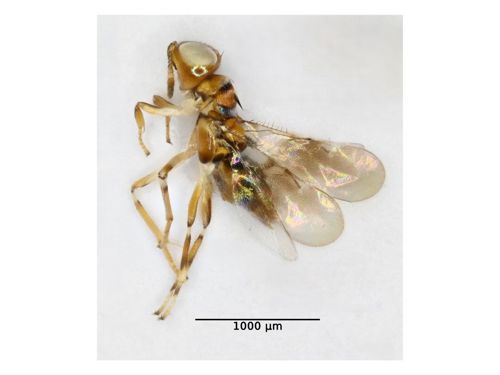
Credit – Evangelos Koutsoukos.
Written by Jakovos Demetriou and Evangelos Koutsoukos. For more information on this Darwin Plus People & Skills project DPLPS005, led by Enalia Physis, please click here.